Exit, Voice, and the Purple Line

Sustaining Civic Power in the Age of Mass Protest

Elizabeth McKenna

emckenna@hks.harvard.edu

Harvard Kennedy School

March 6, 2026  |  Eastern Sociological Society  |  Washington, D.C.

1

We live in an age of mass protest and mass political participation.

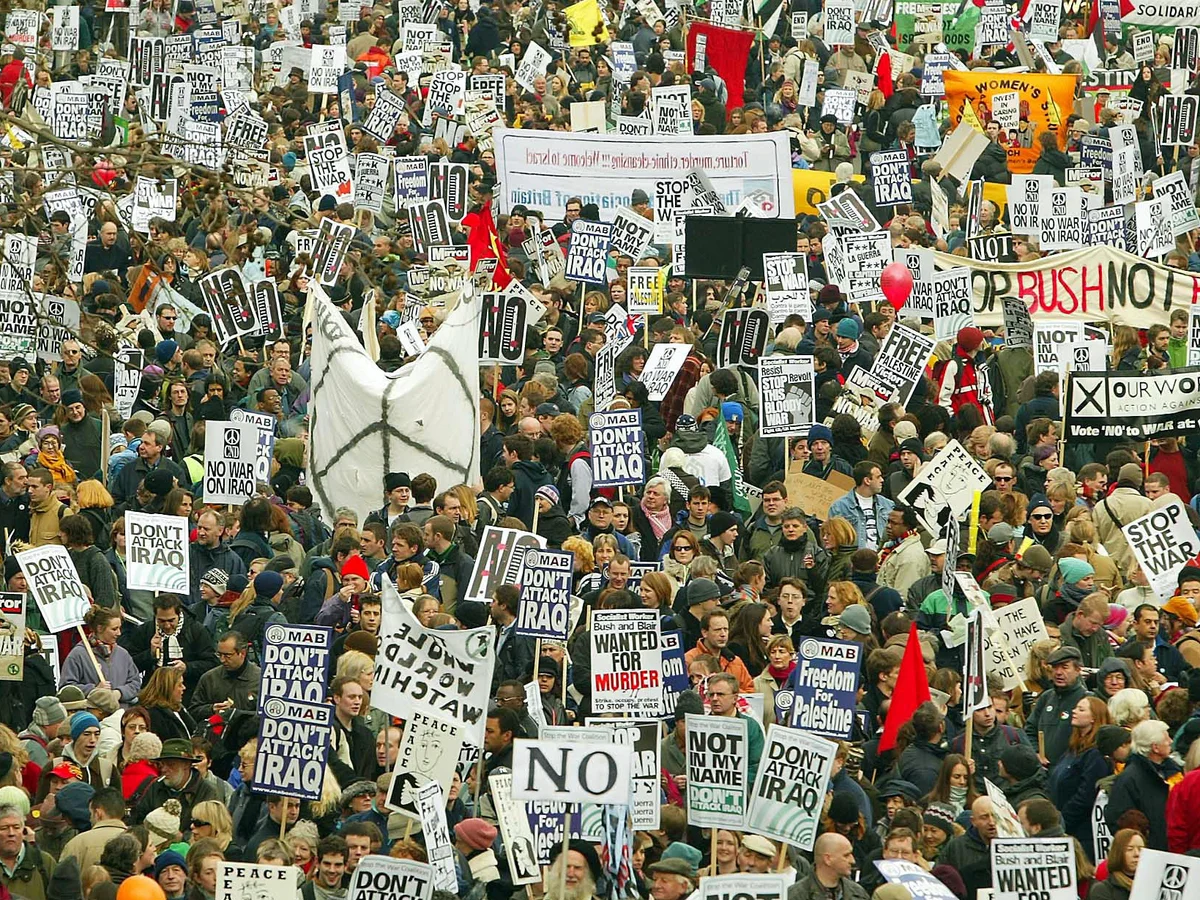
Iraq War protests 2003 Iraq 2003
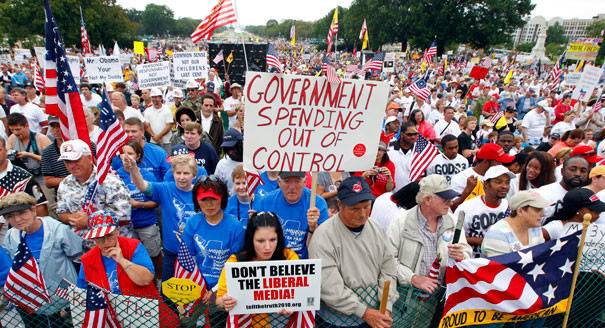
Tea Party Rally 2009 Tea Party 2009
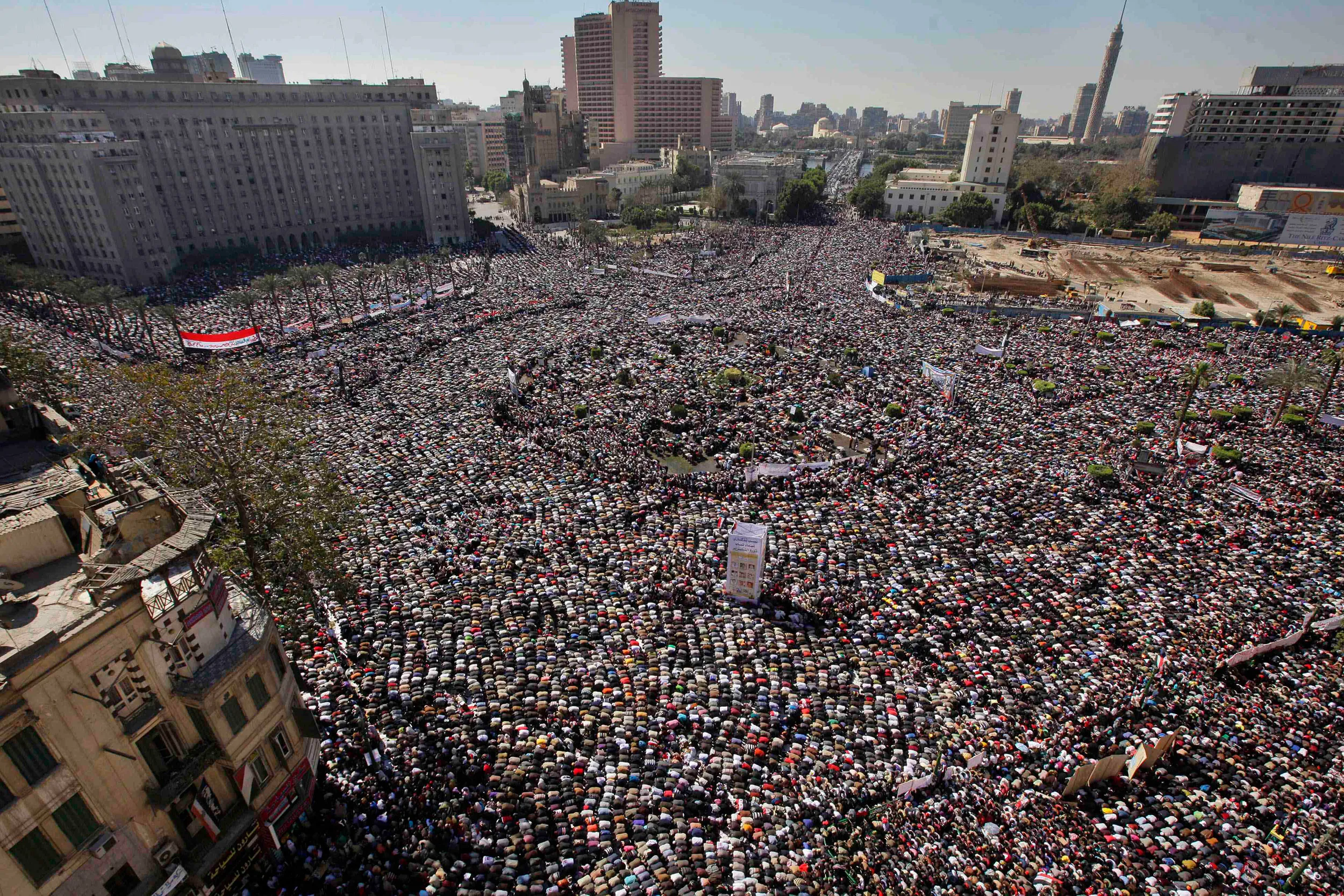
Arab Spring 2011 Arab Spring 2011
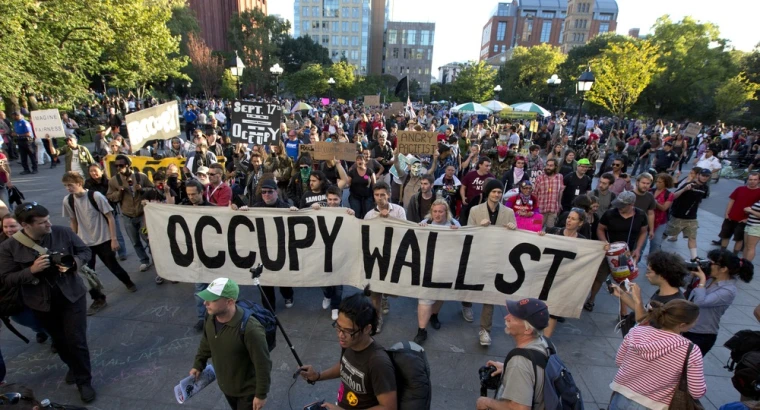
Occupy Wall Street 2011 Occupy 2011
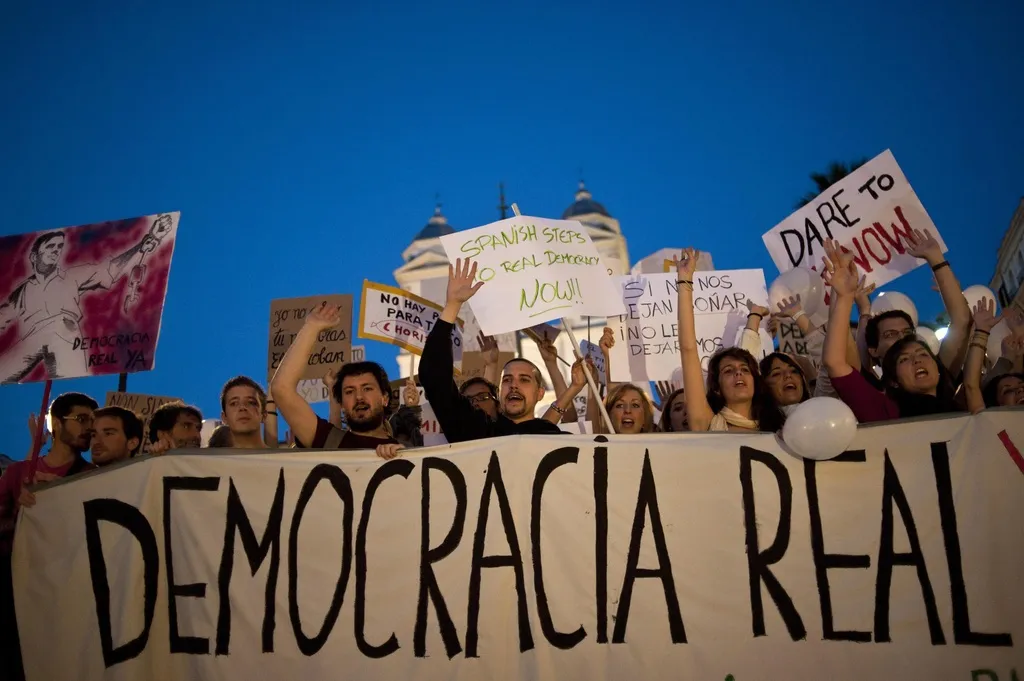
Indignados Spain 2011 Indignados 2011
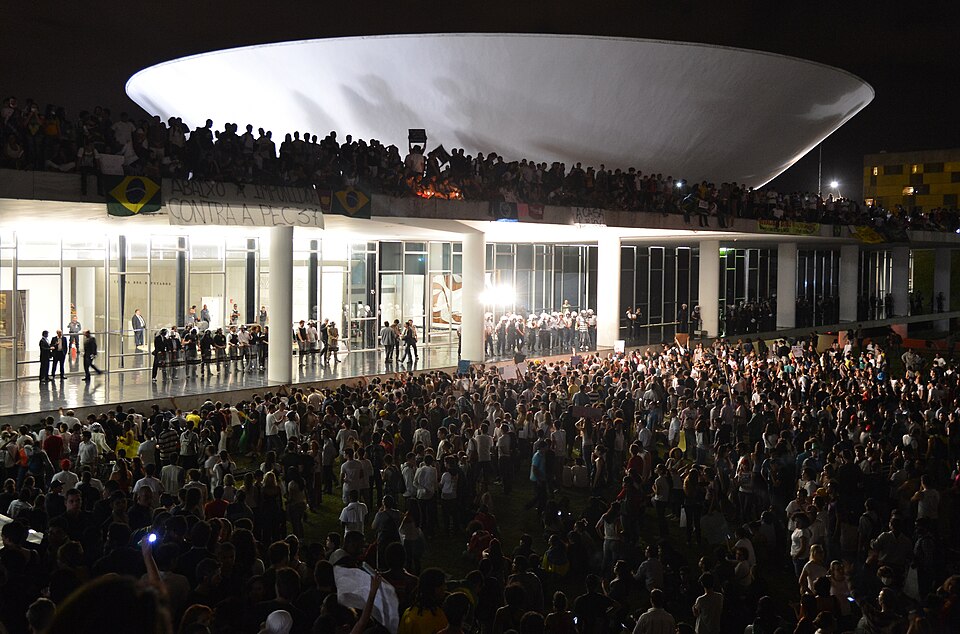
Jornadas de Junho Brazil 2013 Junho 2013
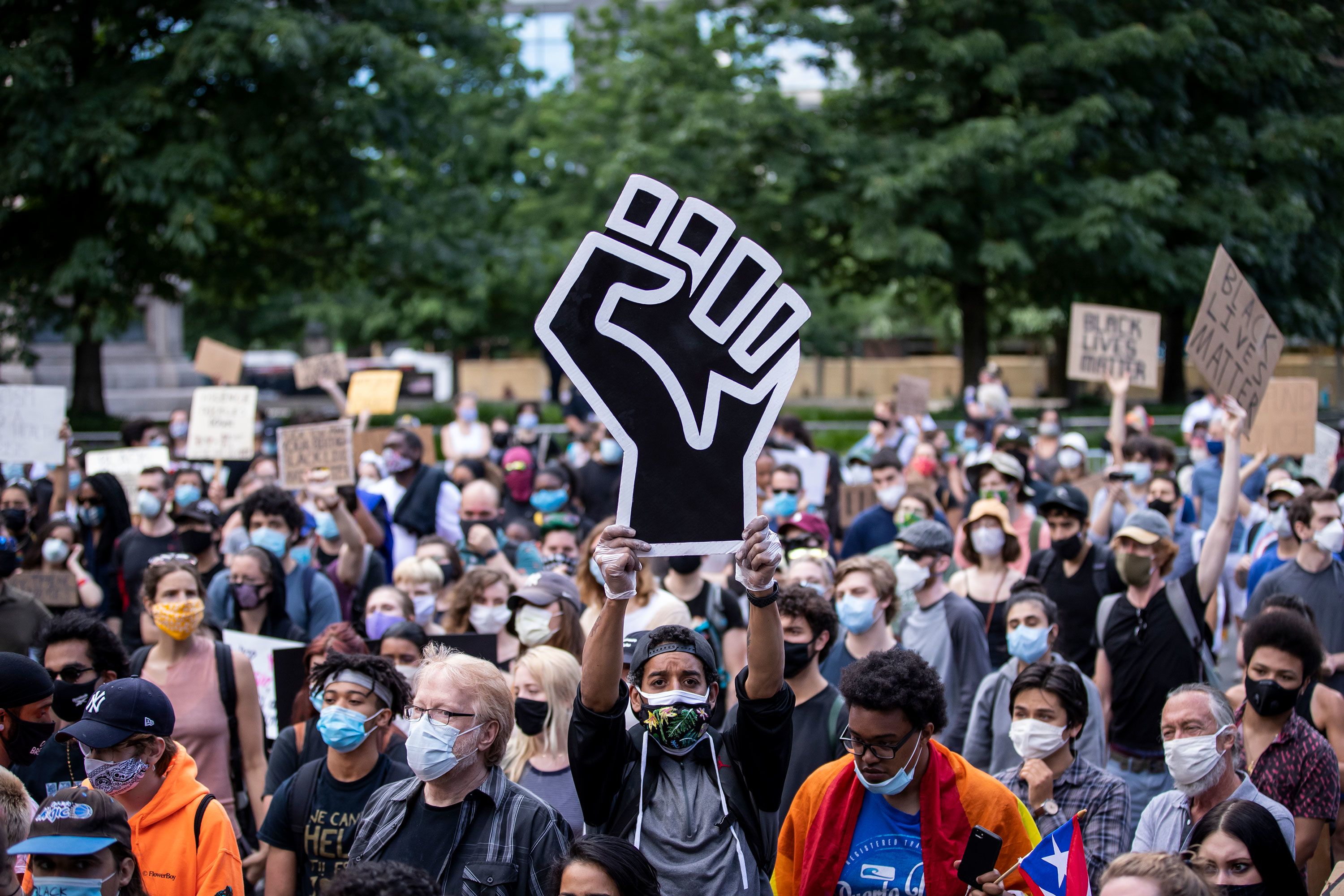
Black Lives Matter 2014 BLM 2014
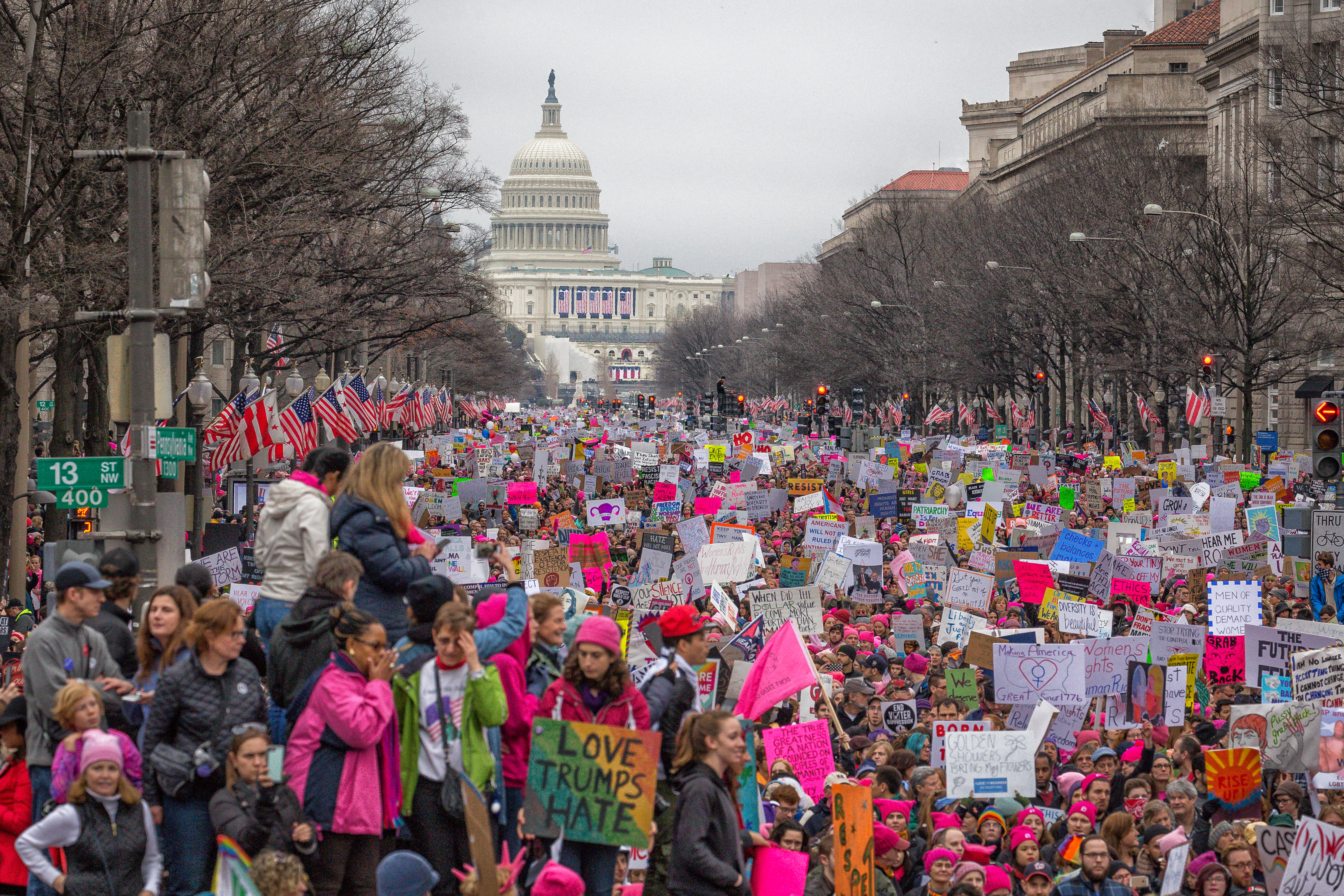
Women's March 2017 Women's March 2017
Day Without Immigrants 2017 Day w/o Immigrants 2017
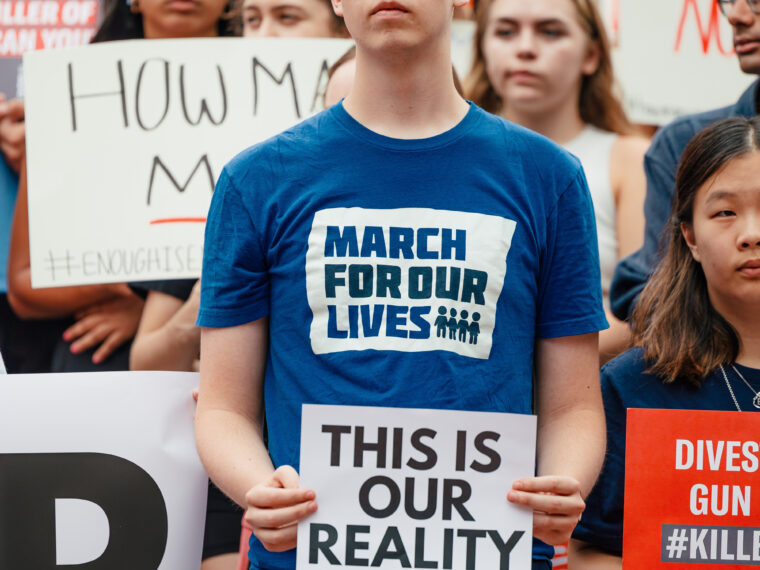
March for Our Lives 2018 March for Our Lives 2018
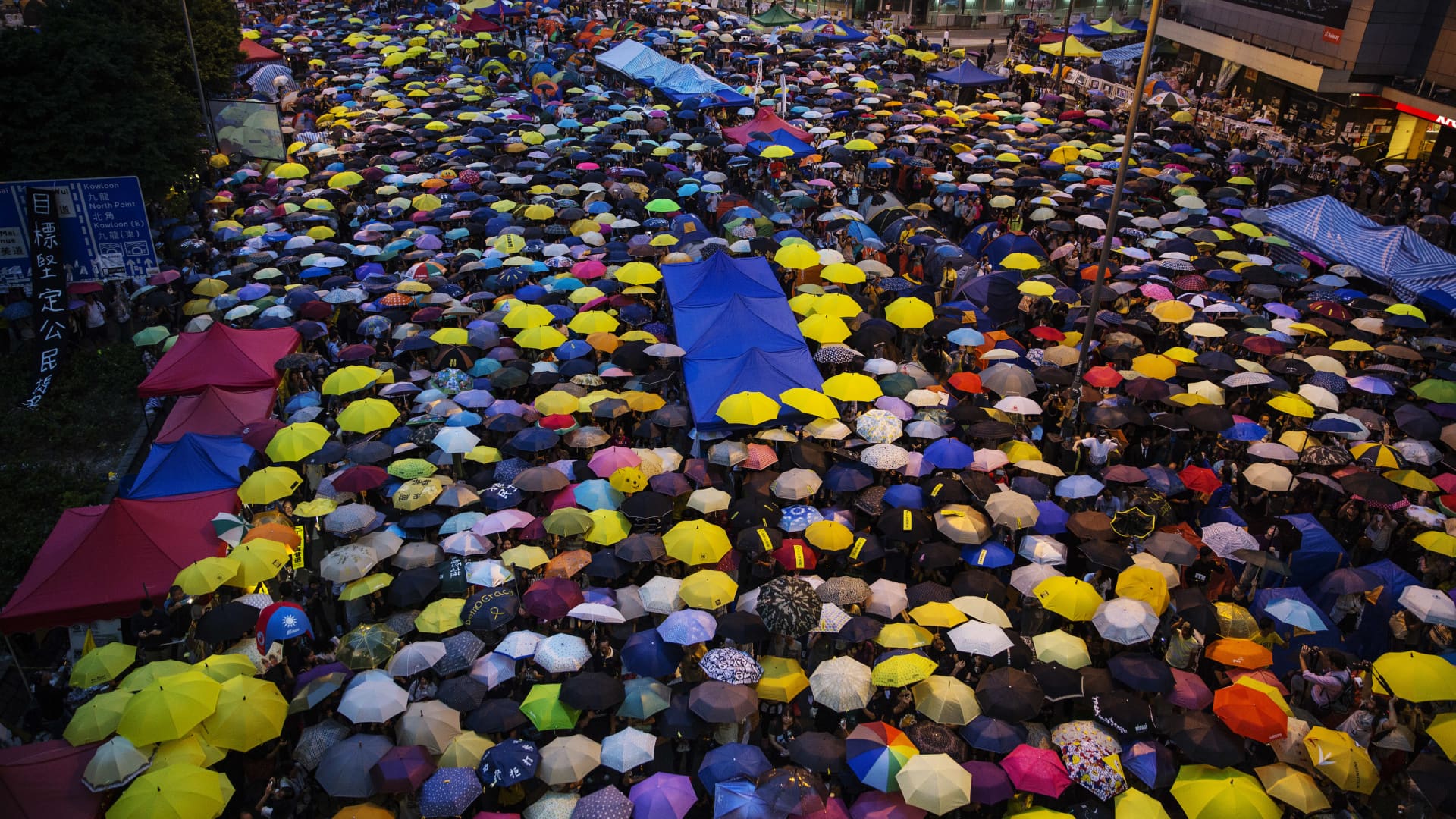
Hong Kong 2019 Hong Kong 2019
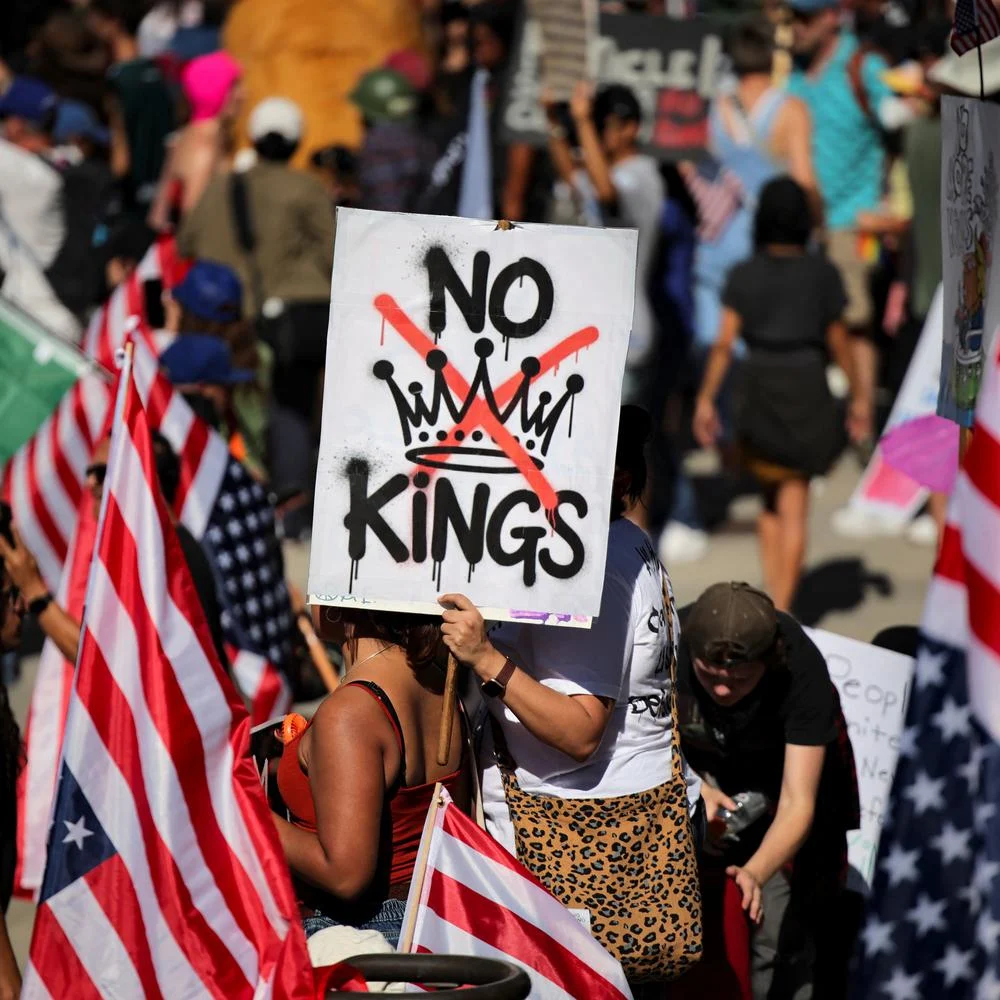
No Kings protests 2025 No Kings 2025
2

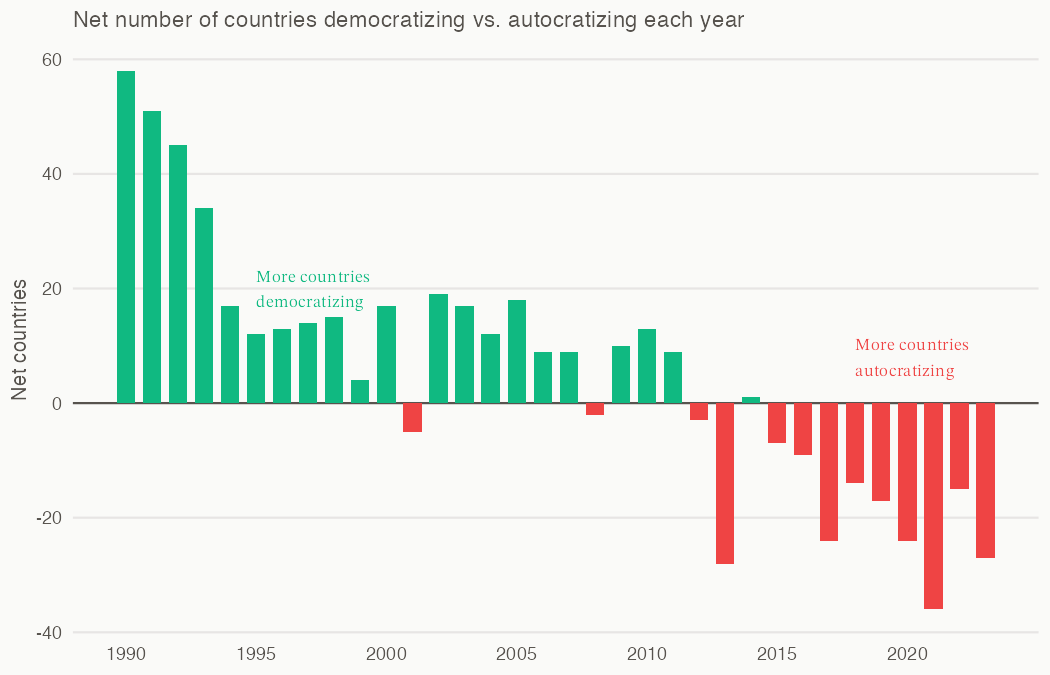
At the same time, democracy is eroding.

V-Dem Autocratization Chart

Source: Varieties of Democracy (V-Dem) Dataset v15. Coppedge et al. (2024). [Link]

3

Why (under the same conditions of democratic stress) do some organizations convert participation into policy influence while others don't?

4

The Participation-Power Gap: What We Don't Know

5
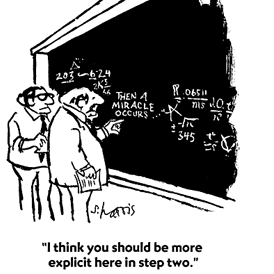
Cartoon
6

POLIS Dataset

Participation, Organizing, and Local Influence Study

Tracks the organizational infrastructure linking civic participation and political power

38
organizations
10
states
41K
participants
54M
voter contacts

E. McKenna, 2026, "POLIS Database (Participation, Organizing, and Local Influence Study)", Harvard Dataverse, doi:10.7910/DVN/SCLKL7

7

Whose data is included so far?

38 independent power-building organizations (IPOs) — multifaith, multiracial, working class membership associations

DDx voter contact comparison (2024 General Election):

POLIS IPOs
Mainstream Dem Programs
Voters of Color
78%
45%
Under Age 44
52%
38%
Low Propensity
61%
50%
Rural Voters
35%
18%
New Registrants
24%
12%
1 in 8
Harris-Walz voter contacts came from POLIS IPOs
72% higher
IPO contact rate (9.3% vs 5.4%)

DDx = Democratic Data Exchange · Includes Biden-Harris 2024 campaign · Comparison between POLIS IPOs and other Democratic-aligned voter contact programs

8
Amusement park
"Getting you to vote is just getting you into the amusement park. It doesn't get you on any of the rides. From there, we talk about the legislation, the policy... all the work that we do to inform and enhance and change the laws to benefit our community."

— John R. Taylor III

Black Male Initiative Georgia

9

Well past the election, the orgs in this study are leading hyperlocal efforts to defend communities against federal overreach.

Minnesota — Faith-based coalitions mobilized rapid response to ICE enforcement, including a 2,000-person rally at the state Capitol.
Ohio — In Springfield (to protect Haitian immigrants), a church event drew 1,000+ attendees; local organizations passed a City Commission resolution on ICE cooperation.
Maine — Coordinated advocacy contributed to the end of enhanced federal enforcement operations.
Missouri — POLIS organizations collected 3x the required signatures to place an anti-gerrymandering measure on the ballot.
10

Three Key Results

  1. 1

    Attrition (exit)

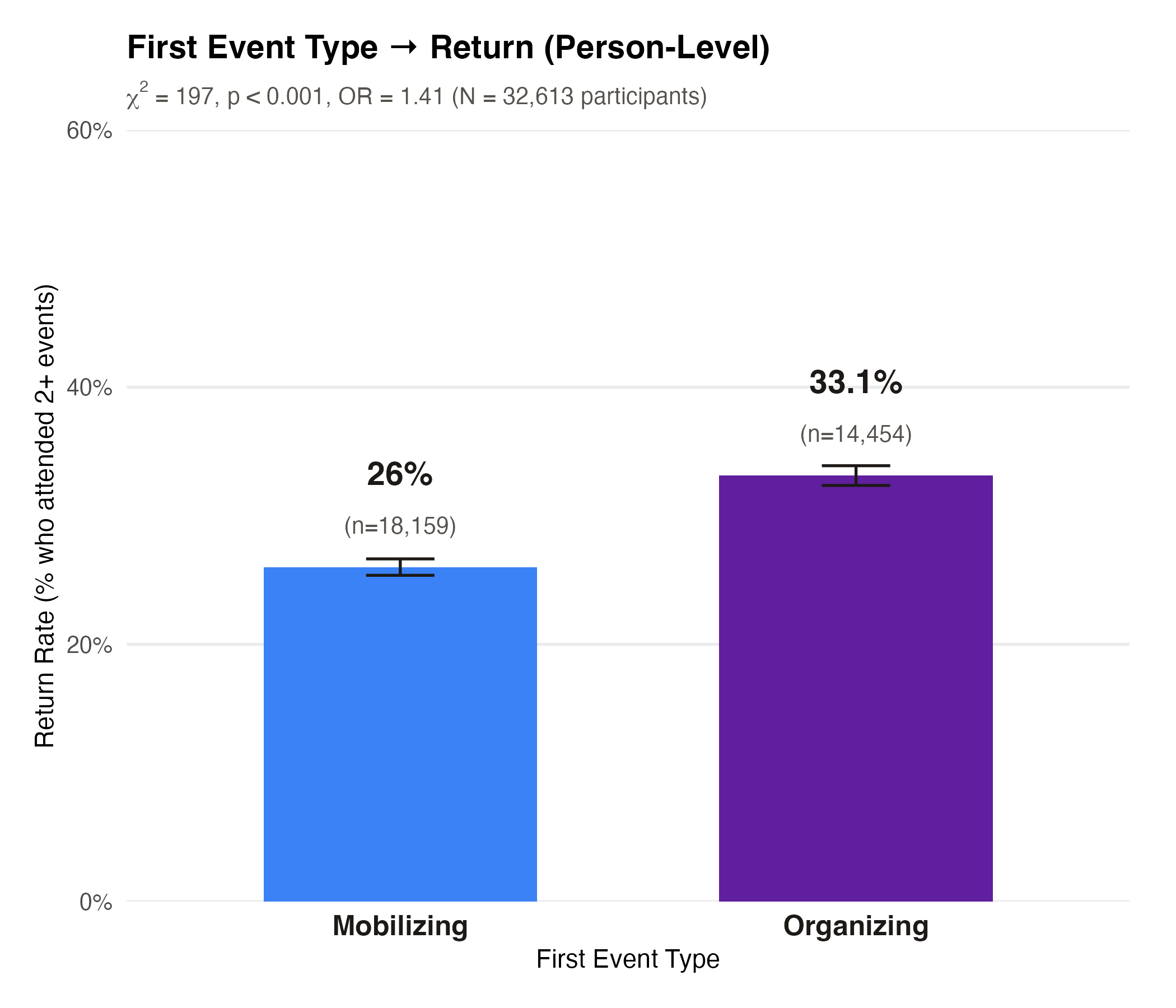
    Most exit after one event, but orgs with higher organizing event ratios retained more participants (OR = 1.41, p < 0.001)

  2. 2

    Leadership density & policy influence (voice)

    Thresholds associated with translation of mobilization into power

  3. 3

    Networks (culture of agency)

    Relational architecture reveals who builds collective capacity

12

Most participants exit after a single engagement.

Grey — 1 event (exit) 70%
Blue — 2-4 events 21%
Purple — 5+ events 9%
Rural Civic NC
16%
FaithMN
15%
Immigrant Rights WI
15%
FaithWI
15%
People Power MI
13%
Civic OH
13%
Civic Growth WI
9%
Immigrant Rights NV
8%
Labor Justice MO
7%
Fight for AZ
5%
United MI
5%
ReproJus MO
4%
Civic Federation NC
4%
Faith Interfaith PA
4%
Black Civic NC
4%
AAPI Civic PA
2%
Urban Action MI
2%
Youth Power AZ
0%

N = 41,625 participants across 18 organizations · Org-level scatter → · 60% Sankey →

13
Bar chart: Organizing 33.1% vs Mobilizing 26.0% return rate

Participants whose first event was organizing had 41% higher odds of returning, as compared to mobilizing.

14
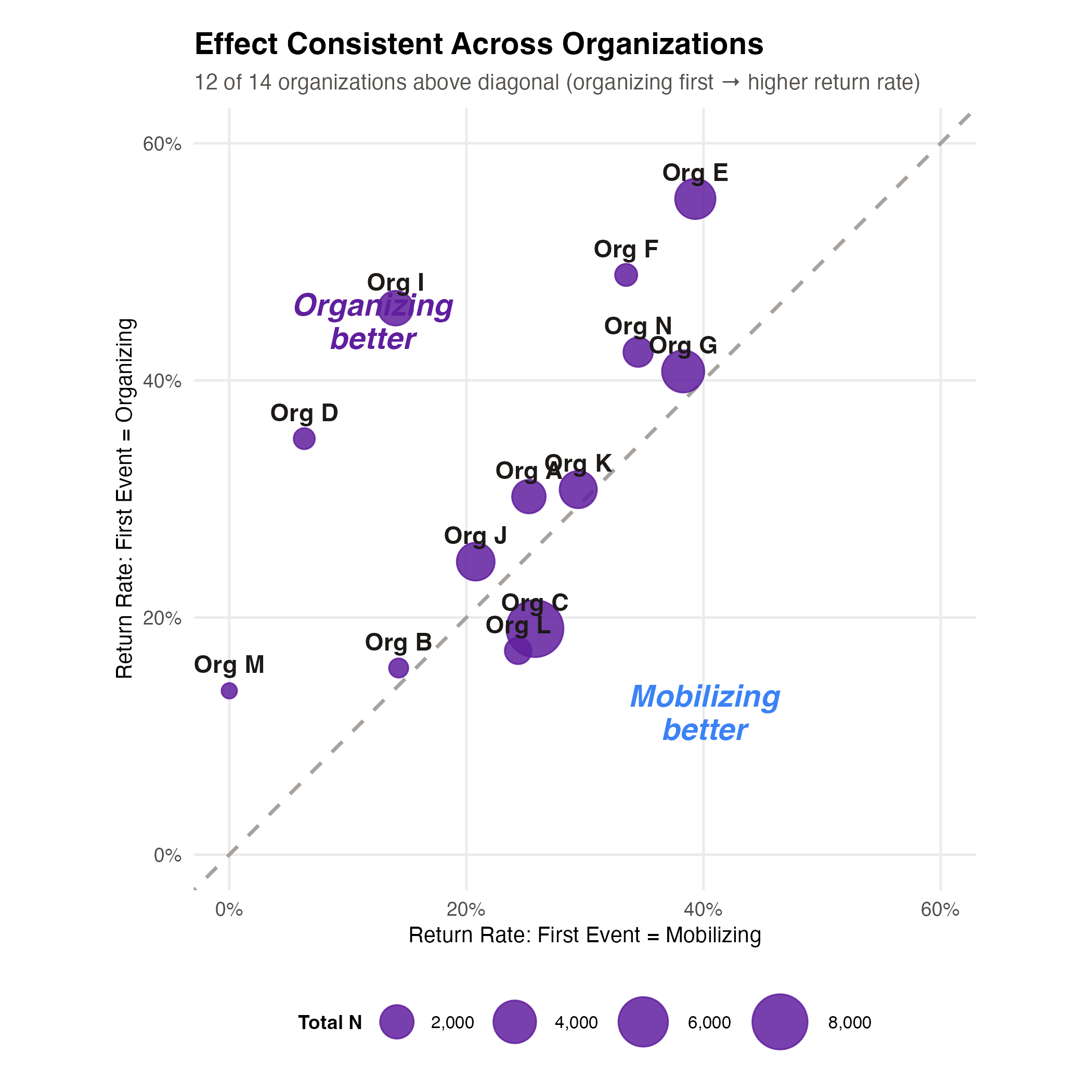
Scatter plot: 12 of 14 orgs show organizing advantage

The effect was consistent across organizations (most points above diagonal).

12 of 14 organizations above diagonal · organizing first → higher return rate

15

Organizations tracked "purple line" leaders prospectively and over time.

Grey (1 event)
Blue (2-4)
Purple (5+)
Civic OH (4,760)
Jan Dec 2,984 1,171 605
FaithMN (3,946)
Jan Dec 2,387 959 599
Rural Civic NC (3,699)
Jan Dec 2,071 1,036 592
FaithWI (1,853)
Jan Dec 1,158 422 271
People Power MI (1,593)
Jan Dec 1,114 269 209
Immigrant Rights WI (585)
Jan Dec 409 90 86

Source: POLIS Dataset · January–December 2024

16

Leadership density (not mobilization volume) is associated with policy influence.

Purple Line Leaders Base Multiplier 2024-25 Outcomes
>200 3x or larger Statewide wins (MN 7/7 races; OH Emilia Sykes; NC broke supermajority; AZ Prop 139 abortion; WI referenda; MO Prop A min wage, Amend 3 abortion; AZ Prop 479 transportation)
80-200 2x or larger Local campaign wins (e.g., MI judge races, NC school board races)
<50 Any size No policy translation (participation without power)

* Pattern consistent across electoral contexts and across orgs that mobilized similar volumes of participation at peak campaign moments.

17
NC

North Carolina: From school boards to Supreme Court

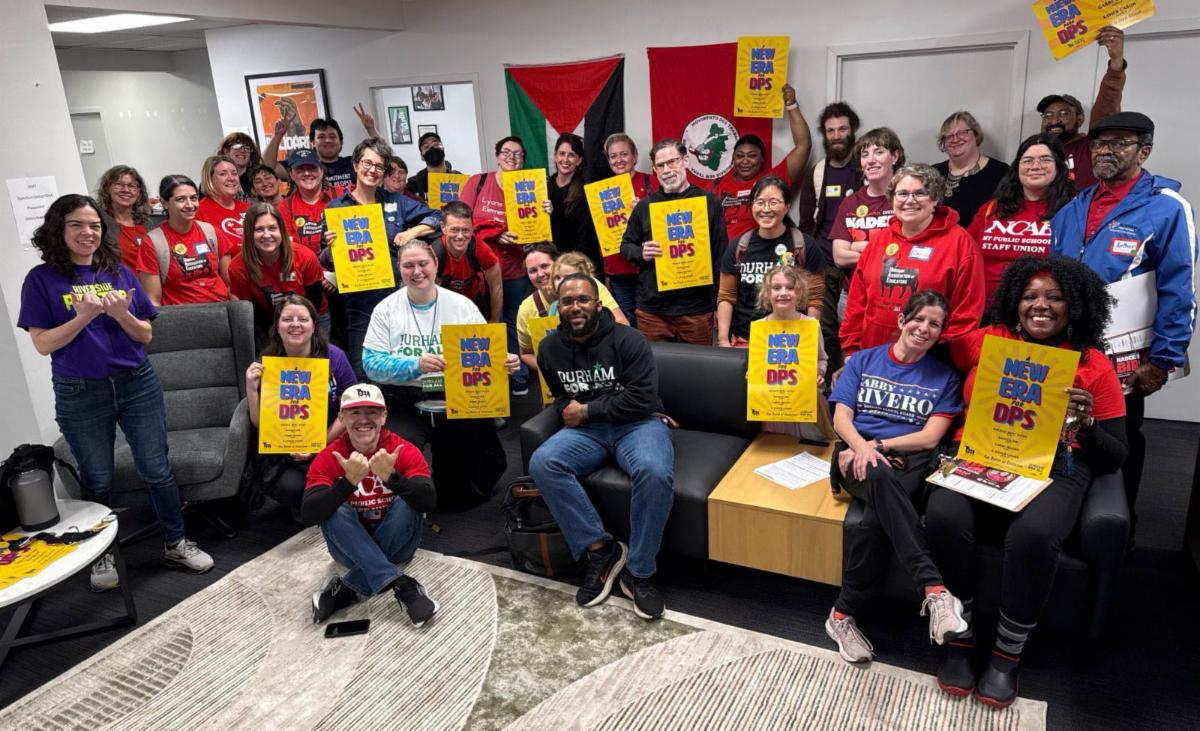
Durham school board win

Durham school board: 4/4 seats won (March 2026) · 995 purple line leaders across 2 NC organizations

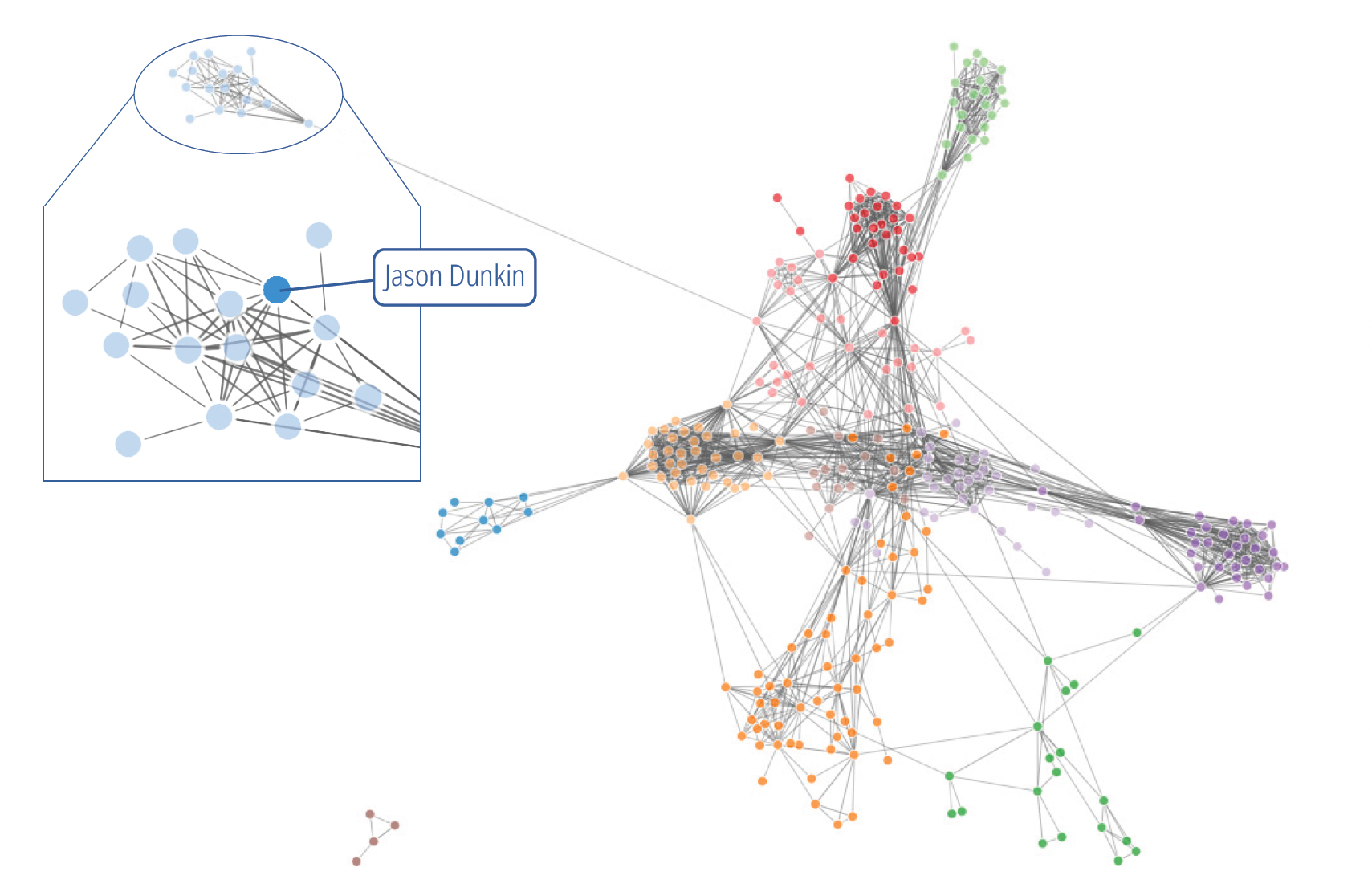
  • Jason Dunkin (purple line leader) first organized residents in Granville Co. to restore a local playground and basketball court, then led a team of vols to elect the first-ever Black Sheriff
  • Allison Riggs won NC Supreme Court by 734 votes (closest statewide race in NC history); POLIS IPOs led ballot-curing effort to secure her victory
  • POLIS IPOs helped flip a state House seat by a mere 228 votes, breaking GOP supermajority
18

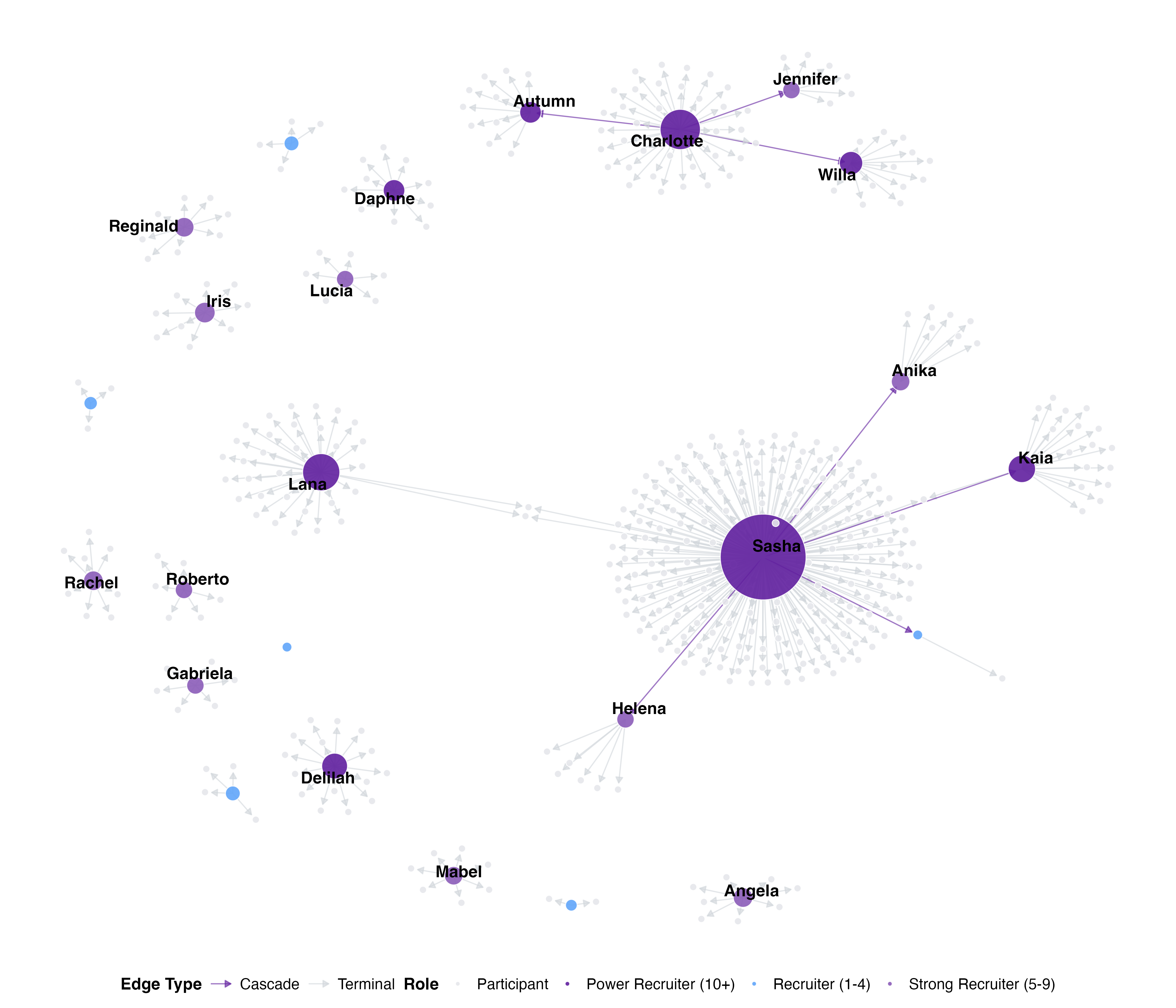
Network analysis reveals which leaders are recruiting and developing others.

N = 426 participants · 413 recruitment relationships

Cascade — recruited someone who recruits
Terminal — recruited someone who doesn't recruit
Recruitment Network
Lena Lucia Charlotte (39) Lana (33) Kaia (17) Delilah (15) Willa (12) Daphne (10) Sasha (185)
19
"It is the depth and structure of organized bases that determine whether a scaled voter mobilization can be translated into long-term power." — Doran Schrantz, ISAIAH
20

Proposed Mechanisms

Based on companion qualitative research: 2 years of fieldwork; 50+ in-depth interviews

  1. 1

    Culture of agency

    Agency develops not through repetition but through proximity to others acting agentically. It requires sufficient density to spread.

  2. 2

    Relational bandwidth

    Each leader sustains finite accountability relationships; below threshold, orgs bleed members after defeats

  3. 3

    Signal credibility to power

    Officials distinguish organized relationships from mobilized turnout; threshold marks when density becomes legible as durable threat

  4. 4

    Redundancy and succession

    Below threshold: org is 1-2 people deep; above threshold: survives burnout and targeting

  5. 5

    Internal knowledge transmission

    Tacit knowledge of local power lives in people; above threshold, organizational learning compounds over cycles

  6. 6

    Boundary-spanning capacity

    Statewide wins require coordinating across nodes (>200 may reflect minimum infrastructure to span territory)

20

Example: Mechanism #1 — Culture of Agency

"I made a choice with my team that we were going to believe in people a lot more and center actual normal people in our work and ask them to do hard things and not even hard things, just necessary things...And since then, every single organizer has an organizing committee in specific districts that they're organizing. We're not just being a grab bag, seeing whoever comes toward us. We were like, no, we need to build power in this district." — Rowan, ReproJus (MO)
"You know when you are in a sí se puede group or a no se puede group." — Joy Cushman
21

Three Theoretical Conversations

Mass Mobilization & Thresholds

Core Insight

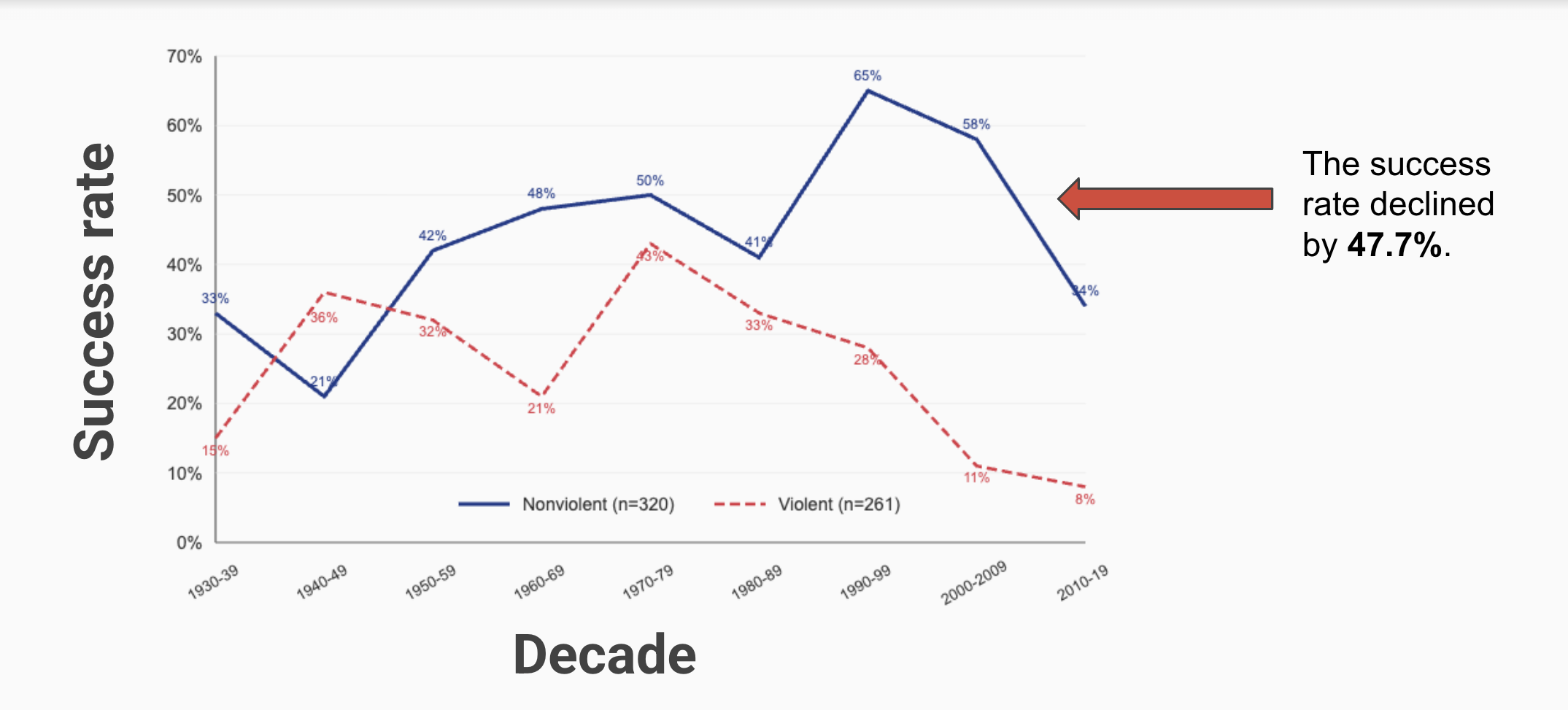
Participation scale associated with regime-level disruption (the 3.5% rule) (Chenoweth & Stephan 2011; Chenoweth 2020: 47% decline in success rate since 2010)

Empirical Domain

Maximalist campaigns, autocratic overthrow

Purple Line Extension

Incremental policy influence at state and local level

Organizing vs. Mobilizing

Core Insight

Depth over breadth (Han 2014; McAlevey 2016)

Empirical Domain

Organizational civic depth

Purple Line Extension

Empirical operationalization of the distinction; validated thresholds from longitudinal data

Exit, Voice, and Loyalty

Core Insight

Exit is default; voice requires investment (Hirschman 1970)

Empirical Domain

Individual disposition toward voice or exit

Purple Line Extension

Without leadership density, exit is structurally unavoidable

22

Limitations

23

Future Directions

24

Thank You

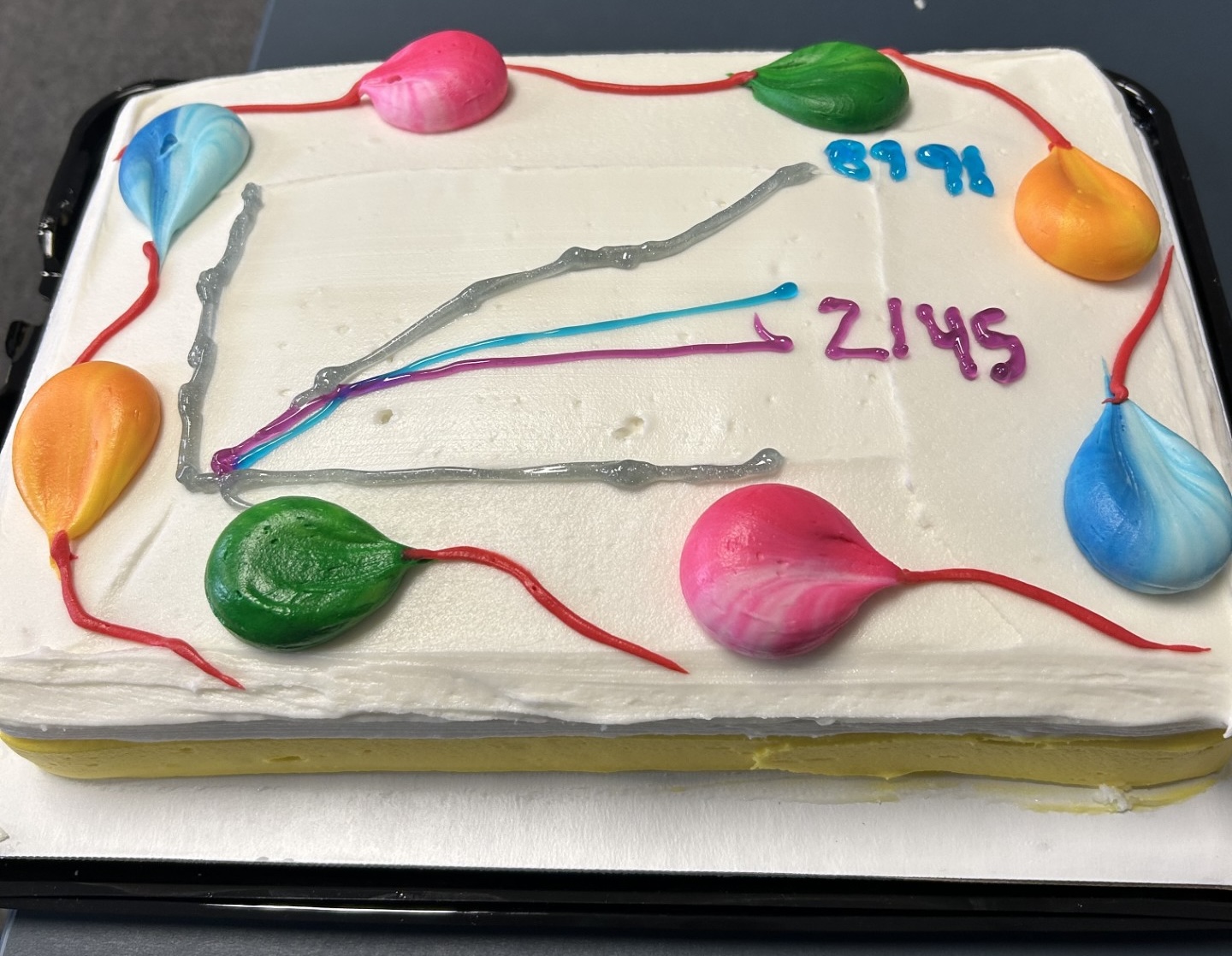
Purple line cake

PICO (CA), 2025

Elizabeth McKenna

emckenna@hks.harvard.edu

25

Appendix

On credible commitment through sustained presence:

"They do the work. They door-knock. They show up, they have monthly meetings to organize in the community to talk about different issues. So they're keeping the community engaged."
"They're effective because they are building, they're building true people power, right? They're not waiting for a spark moment of legislation and then being like, 'Okay, we have to reorganize.' They're organizing 24/7, seven days a week, all year round."
"And I think some groups sometimes they have spark moments and then they kind of lay low and then they come back around and lay low. So [this organization] is just staying in everybody's face."

— State legislator, Missouri (R)
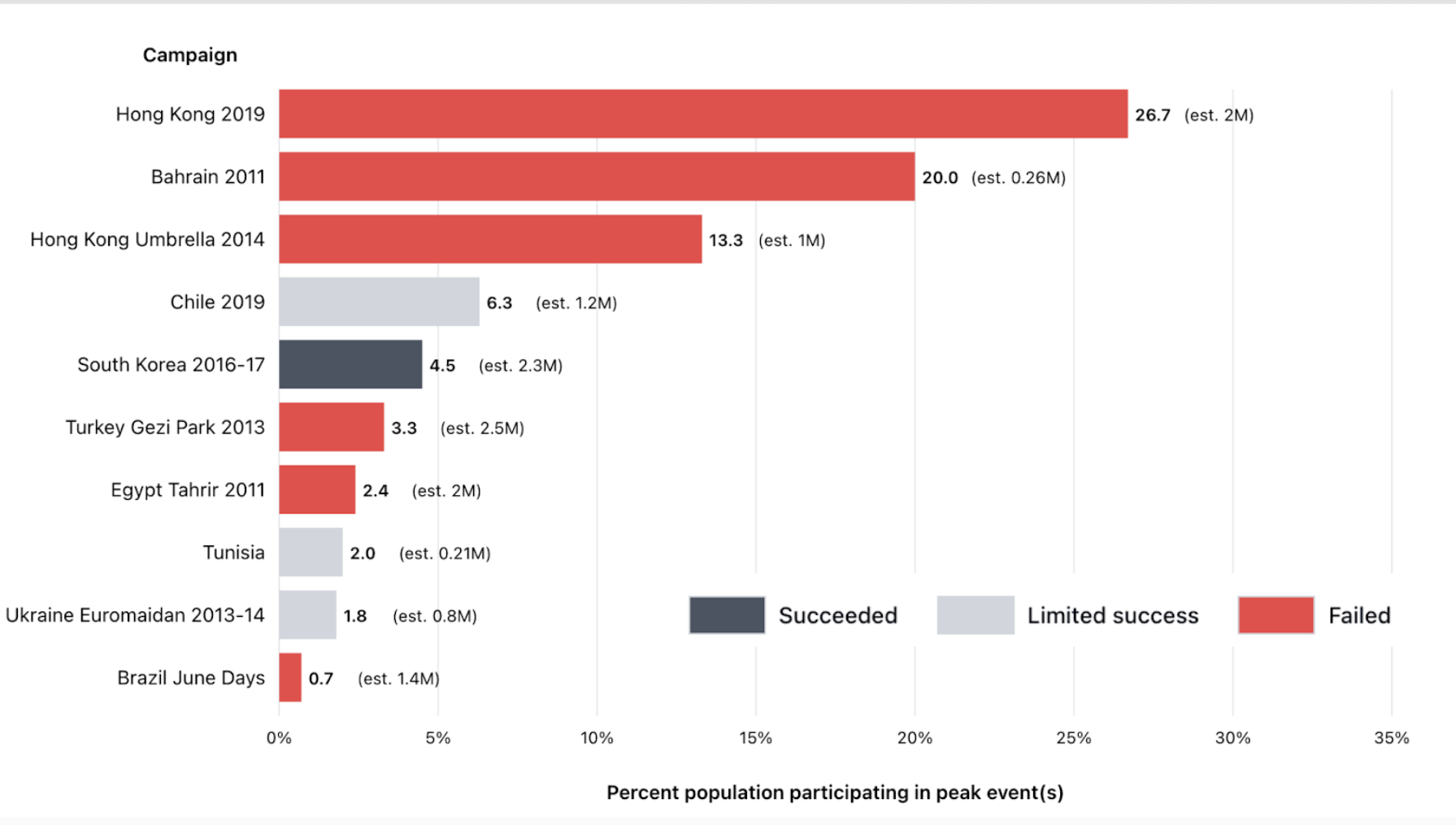
Global Pattern: High Participation, Low Civic Power

Success rate of 10 key mass protests (2010-2020)

If We Burn by Vincent Bevins

Source: Bevins, V. (2023). If We Burn. [Link]

A1

POLIS Methods

What POLIS makes visible:

  • Who participates and how engagement deepens or atrophies over time
  • Internal structure: leadership density, relational architecture, recruitment networks

Outcomes (traced through multiple methods):

  • Policy wins and electoral influence via prospective case studies, interviews, organizational records
  • Relationships with officials via interviews with leaders, volunteers, staff, policymakers

N = 16, more orgs forthcoming · Red, blue, and purple electoral contexts · Data use agreements with each organization · Quantitative microdata linked to qualitative case documentation

A3

Success Rates of Nonviolent and Violent Mass Campaigns (1930-2019)

Success rates by decade

Source: Chenoweth, E. (2020). "The Future of Nonviolent Resistance." Journal of Democracy. [Link]

A2

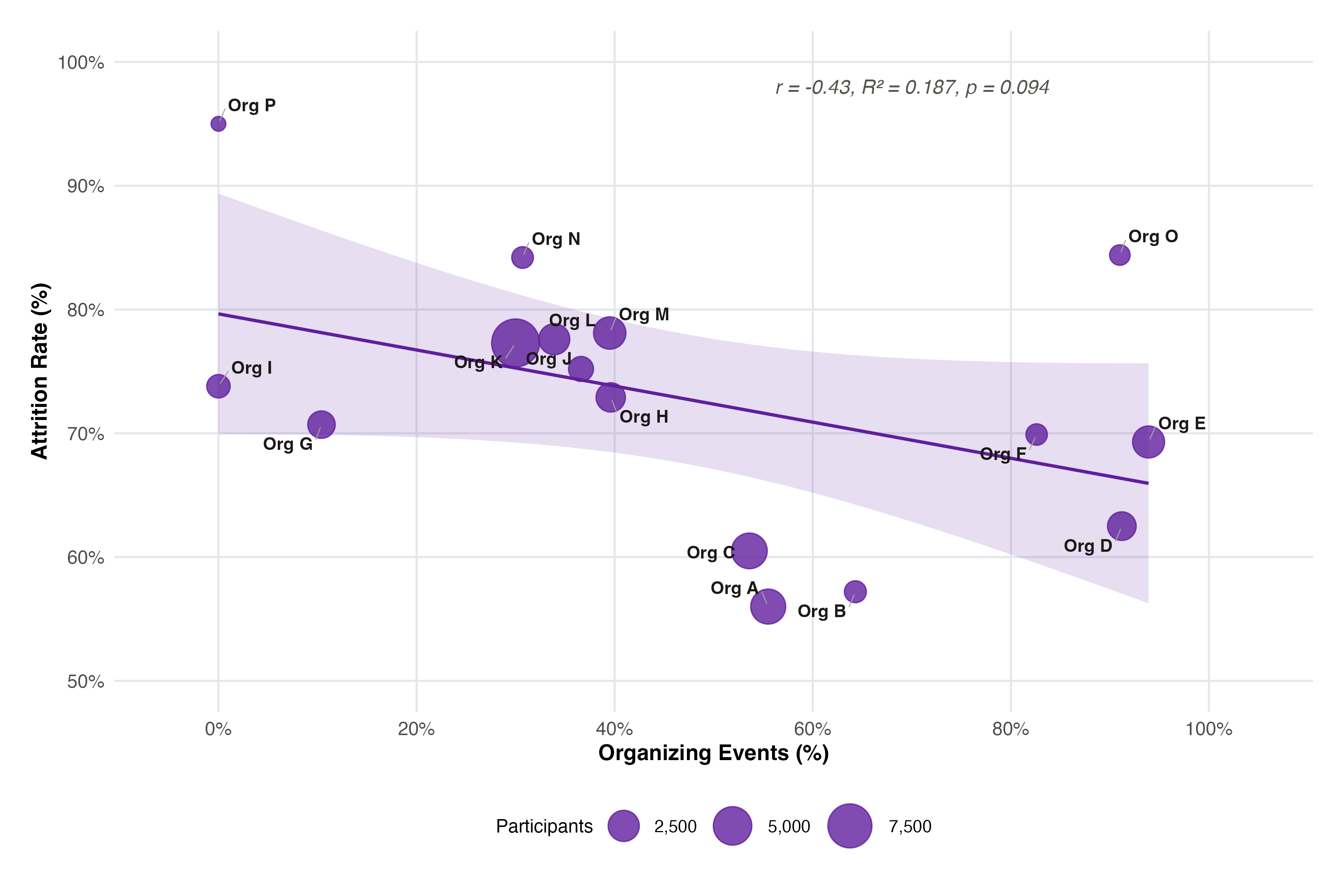
Event Portfolio Balance vs Attrition (Org-Level)

r = -0.43, R² = 0.19, p = 0.094 (N = 16 organizations)

Scatter plot showing organizing percentage vs attrition rate

← Back to Attrition Finding

A3

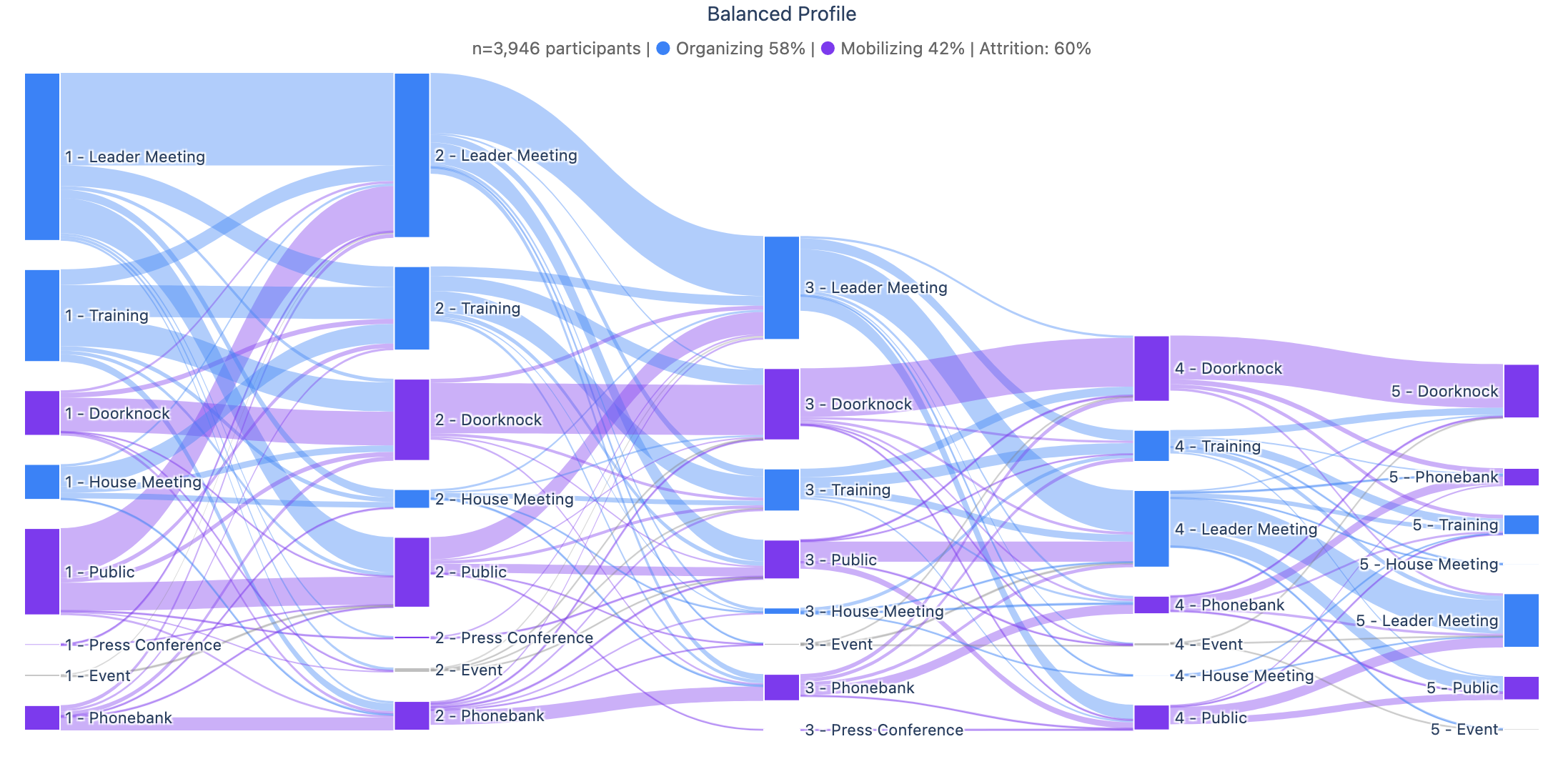
Attrition Analysis: 60% Exit Rate

Attrition chart showing 60% exit rate

← Back to Attrition Finding

A4

Jason Dunkin: Purple Line Leader in Action

Jason Dunkin organizing

NC purple line leader · Led team that helped elect first Black Sheriff in Granville County

A7